A First-Timer's Guide to Mt. Baker Ski Area
No hotels, no village, no ski-in ski-out, and the world record for snowfall in a single season. What a first visit to the mountain at the end of the road actually looks like.
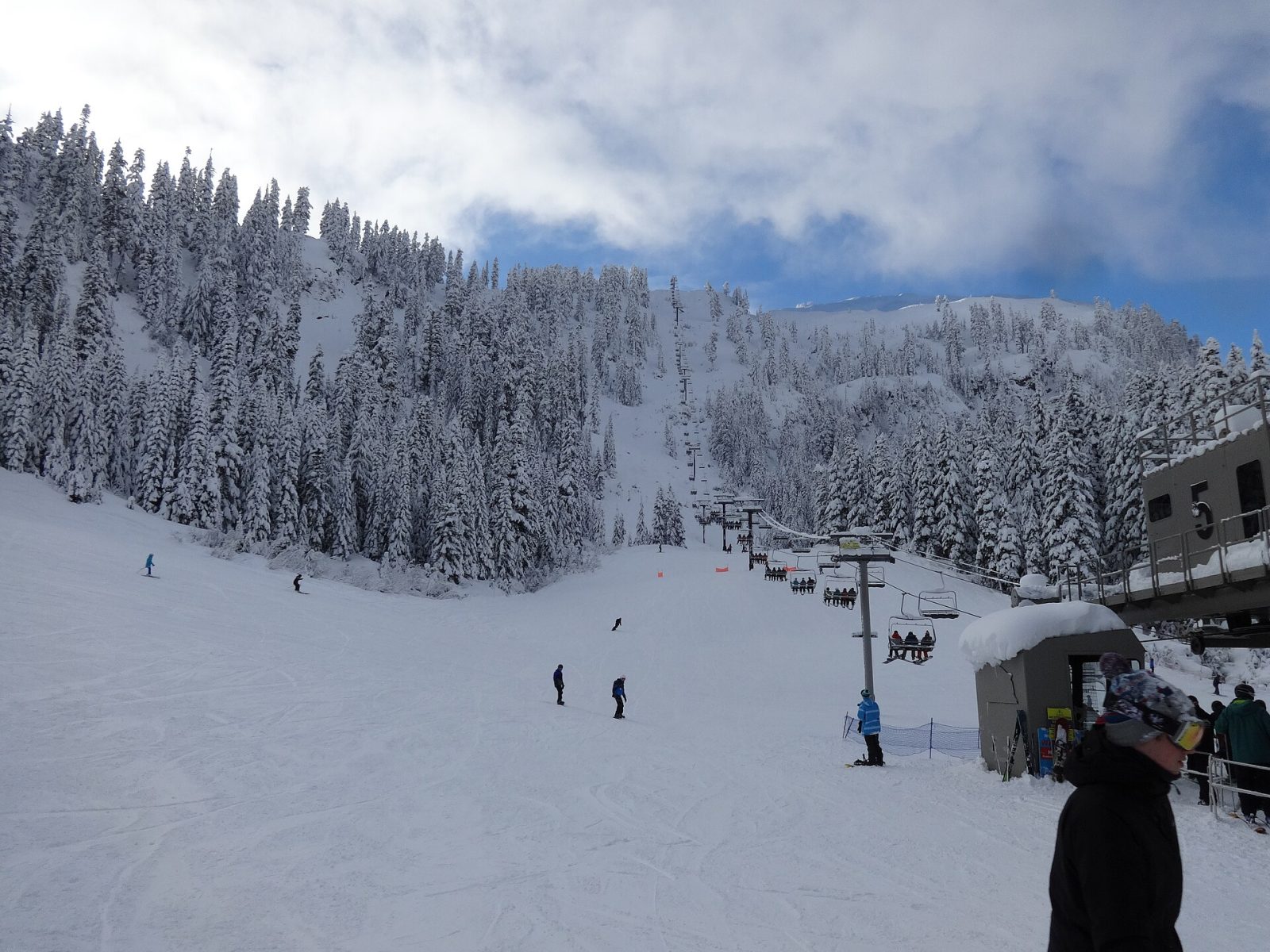
Mt. Baker Ski Area sits at the top of the Mt. Baker Highway, on the shoulder of Mt. Shuksan rather than Mt. Baker itself. It holds the world record for snowfall in a single season: 1,140 inches in the winter of 1998–99, measured with snow stakes and verified by NOAA. The long-term average is around 640 inches a year, and recent seasons have ranged from 303 inches (2014–15) to 866 (2016–17). That number explains most of what follows, from the terrain to the parking.
The layout
Two base areas, White Salmon at milepost 52 and Heather Meadows at milepost 55, are linked by lifts and runs. The base sits at about 3,500 feet and the top at 5,089. Eight fixed-grip quad chairs and two handle tows cover the mountain: Chair 2 (Heather) is the beginner chair; Chairs 3 and 4 run as a continuous loop with the terrain park; Chair 5 climbs the Shuksan Arm side; Chair 7 and Chair 8, the longest lift, serve the White Salmon base. Chairs 1 and 6 have no safety bars and have been designated experts-only since 2011. Beginner runs include Nose Dive, White Salmon and Daytona; Pan Face, The Chute and Gabl's are the expert lines.
What it is not
There is no on-mountain lodging, no village and no ski-in, ski-out anywhere on the corridor: the ski area is strictly day-use, and everyone drives back down the highway when the lifts close at 3:30. The lodges serve food and rent gear; lessons run from a beginner package for ages seven and up to private lessons. Lift tickets have traditionally been sold at the window rather than online, and prices change each season, so check mtbaker.us for the current ticket and pass details rather than a blog post. Night skiing ran for the first time in March 2026 on the White Salmon side; do not count on it recurring until the ski area says so.
Snow and weather
Storms arrive off the Pacific and stall against the Cascades, which is why the totals are so large and why visibility can drop to nothing in an afternoon. The season typically runs from late November or mid-December into late April, with the deepest base in February and March. A bluebird day after a storm is the day everyone talks about; plan for the days in between with goggles that handle flat light and layers that handle wet snow. Hours are 9:00 a.m. to 3:30 p.m. daily.
Getting there and parking
From Glacier the drive is about 17 miles and 30 minutes on a clear day, longer whenever the traction level rises. Parking is first come, busy weekend lots can fill by mid-morning, and overnight parking needs an advance reservation. Read the road report and WSDOT's SR 542 page before you leave the cabin, and carry chains whenever the forecast shows snow at road level.
Beyond the boundary
The ski area runs an open-boundary policy rather than gates, which means the responsibility sits with you. The Shuksan Arm above Chair 8, the Hemispheres off its far side, and Table Mountain and Herman's Saddle from the backcountry lot near Heather Meadows are famous and serious. Check the Northwest Avalanche Center forecast at nwac.us, carry a beacon, probe and shovel, and know how to use them. Sledding is banned inside the ski area boundary and there is no tubing park; for a slower day, Salmon Ridge Sno-Park at milepost 46 has 15 miles of groomed non-motorised trails from December through March, with a Sno-Park permit.